SC004b From normal to lognormal
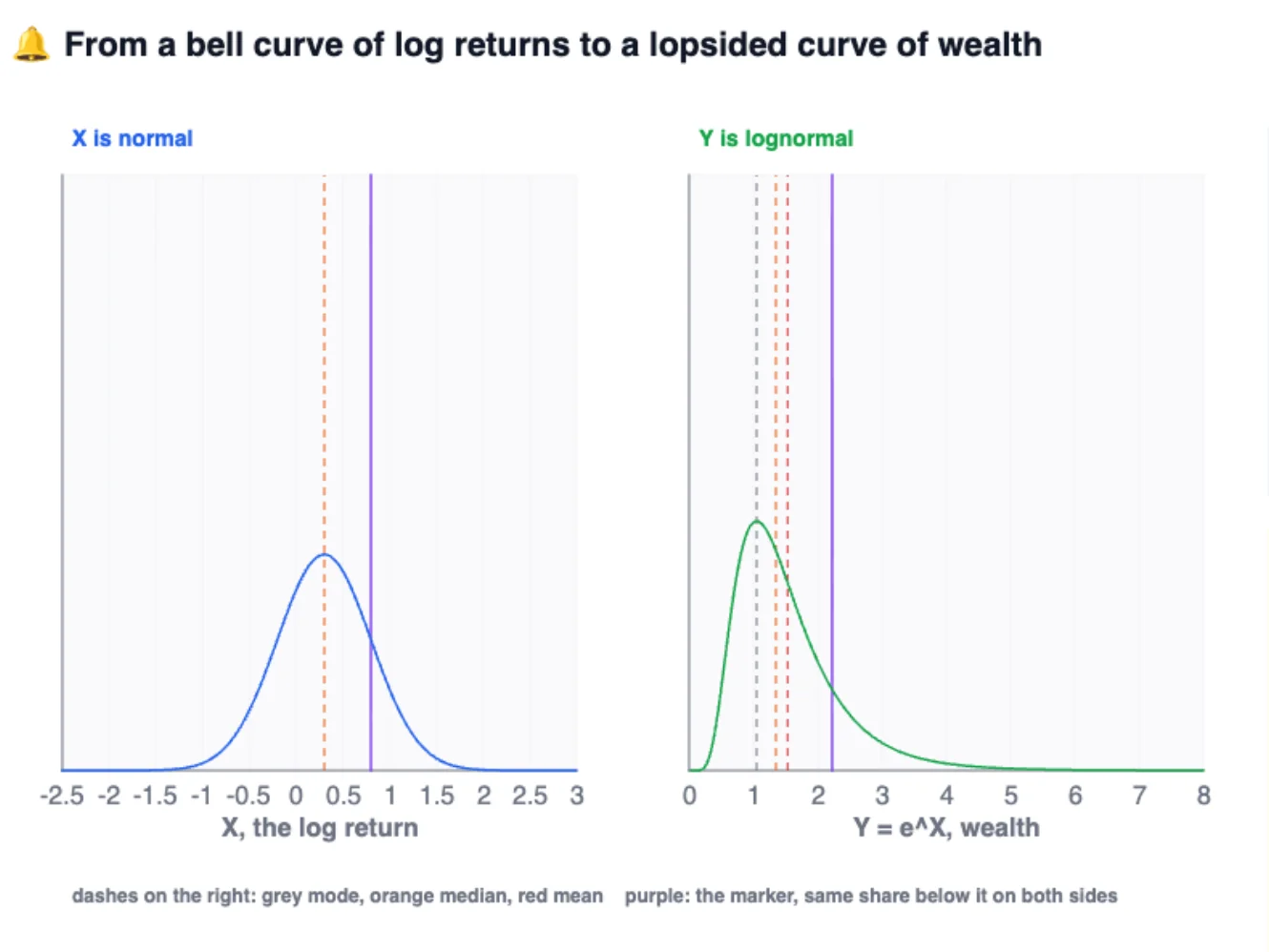
Returns add up in logs and multiply in money. That one fact creates two different averages for the same investment: the median e^μ and the mean e^(μ + σ²/2).
Nine interactive steps: adding against multiplying returns (+10%, +10%, −10% gives 8.9%, not 10%), the log scale as a ruler for multiplying, how logs turn multiplying into adding, a bell curve becoming a lopsided curve, 200 investors lined up against the average, the two meanings of μ, a converter and a cheat sheet.
Step 4 is the bridge to Itô’s lemma: the average log return falls below the average return by about half the variance, the same −σ²/2, shown with three numbers. With 10% drift, 40% volatility and 10 years, the average outcome is 2.72× while 44% of outcomes end below the start.
Real returns have fatter tails than this model, so wealth is only roughly lognormal; the chapter says so openly.
Explore next
Stories, illustrations, and interactive mini lessons. Ask a question.